

Audubon Bien PL 428 Black Skimmer
Most photos in this report link to larger copies of the same photo in case you would like a more detailed view.
The Audubon Bien Edition is a reissue of original Double Elephant Folio edition The Birds of America. Published by Roe Lockwood in conjunction with John Woodhouse Audubon, this is the first folio edition of Audubon’s work to be published in America. Publication began in 1858, with most prints being issued in 1859 and 1860. By the end of 1860, publication was discontinued due to poor economic conditions resulting from the war. The early death of John W. in January 1862 ensured that the edition was never completed. The Bien Edition is considered an important milestone in American color printing and lithography. The prints are six-stone chromolithographs, meaning that the printer (New York’s Julius Bien, a German immigrant who brought with him expertise in new printing technologies) used up to six stones with the colors layered to provide additional shades.
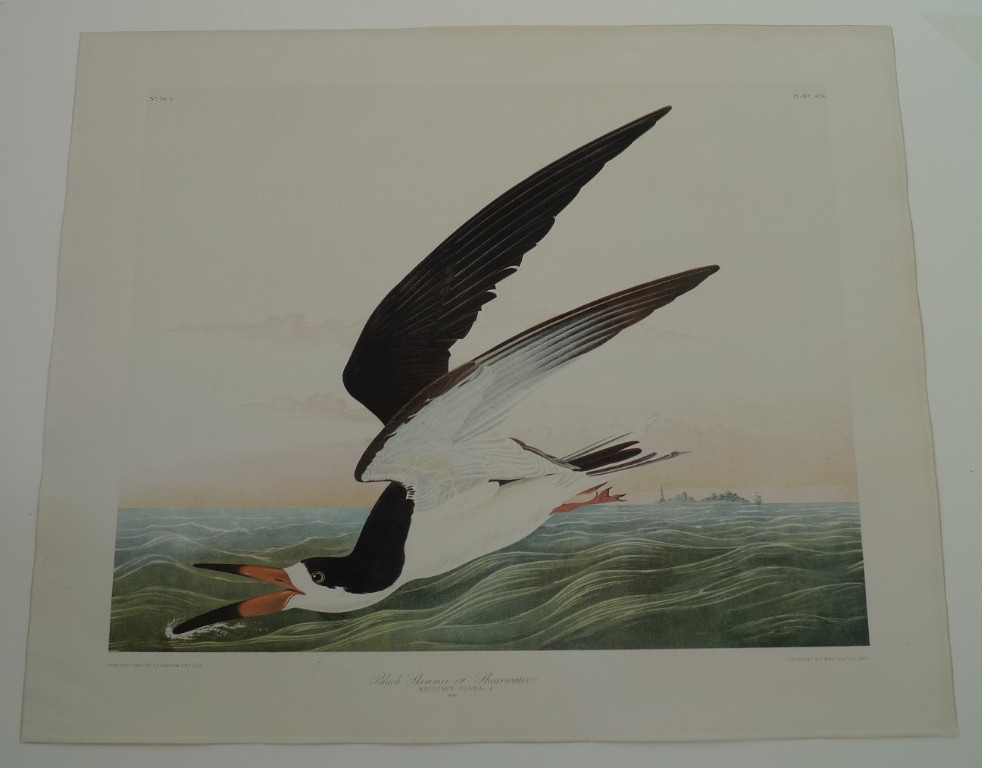
Here is a photo of the print in its entirety. The composition is one of only a few “squared” images in Audubon. Color is very good.
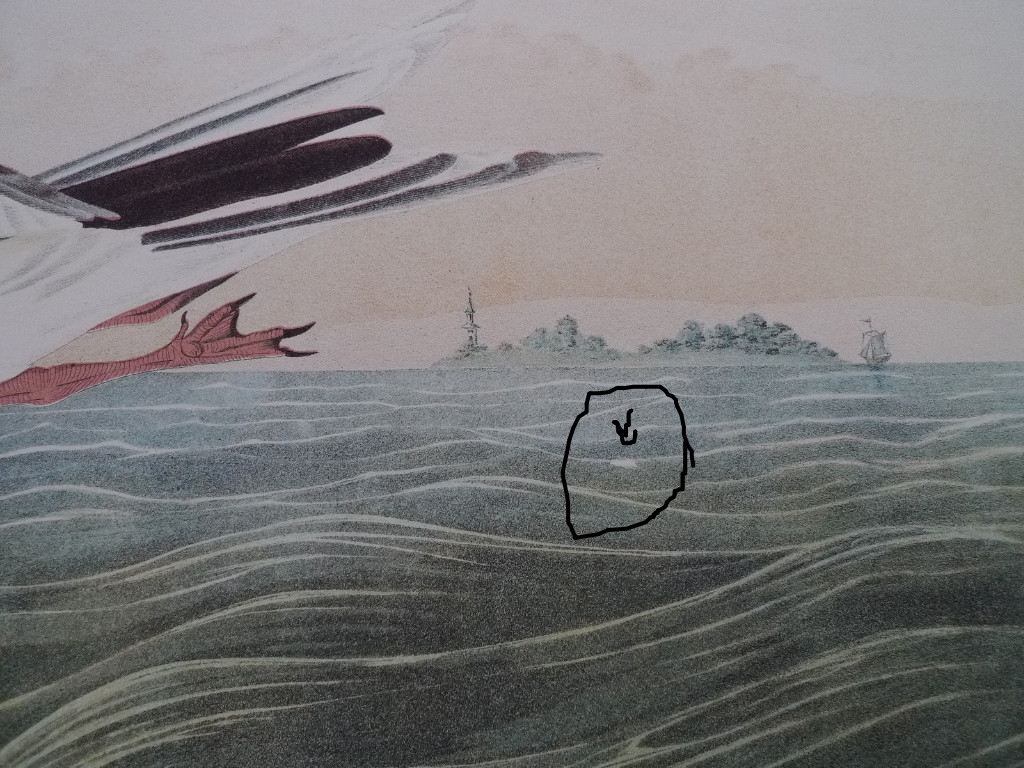
The paper used for the Bien Edition is an American-made paper from the late 1850s. It is probably derived from wood pulp and over time can become acidic. Conservation improves the paper by raising the pH of the paper (that is, acid content is reduced). The sheet measures 30-7/8 inches wide by 25-3/8 inches high, trimmed in the width from the conventional standard of 38 to 39 inches for a full sheet. The height of this print is comparable to that of a full sheet, which would typically be in the range of 25-26 inches. This print was conserved a few years ago, and is in generally good condition. There are some paper repairs (mostly in the bottom corners) and a little creasing in the upper corners. There is a spot in the water of the image where there is what seems to be a small abrasion in the surface of the paper, that could easily be taken as part of the composition. Below is a photo of that area…photo has a black circle to point out the spot in question.
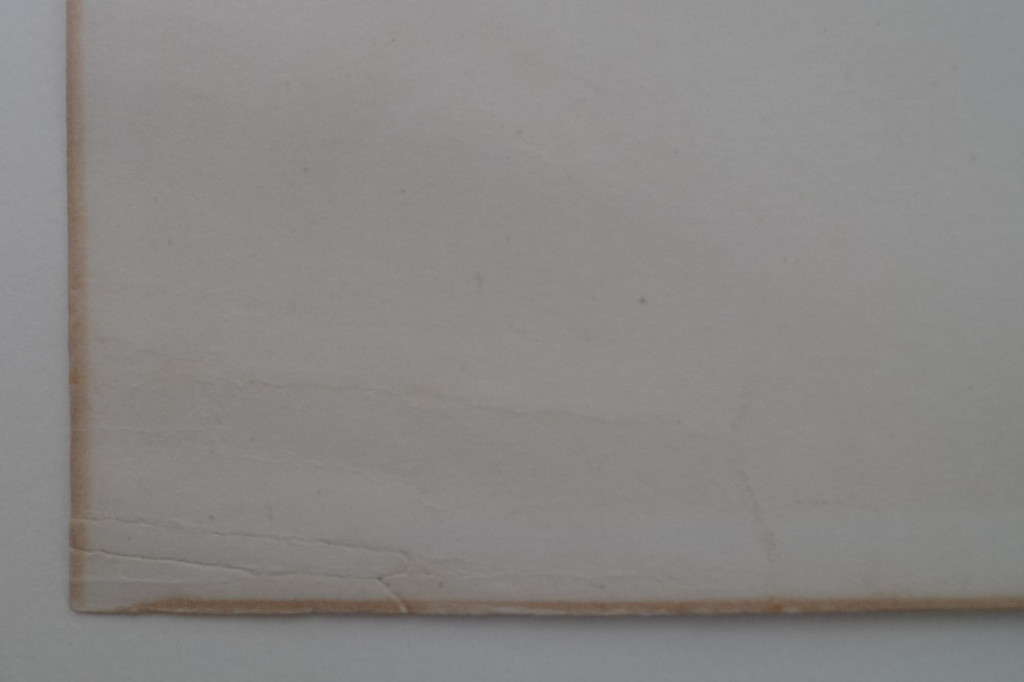
Repairs in bottom left corner – small and very narrow chips of paper were reattached, tear was mended. Corner is creased.
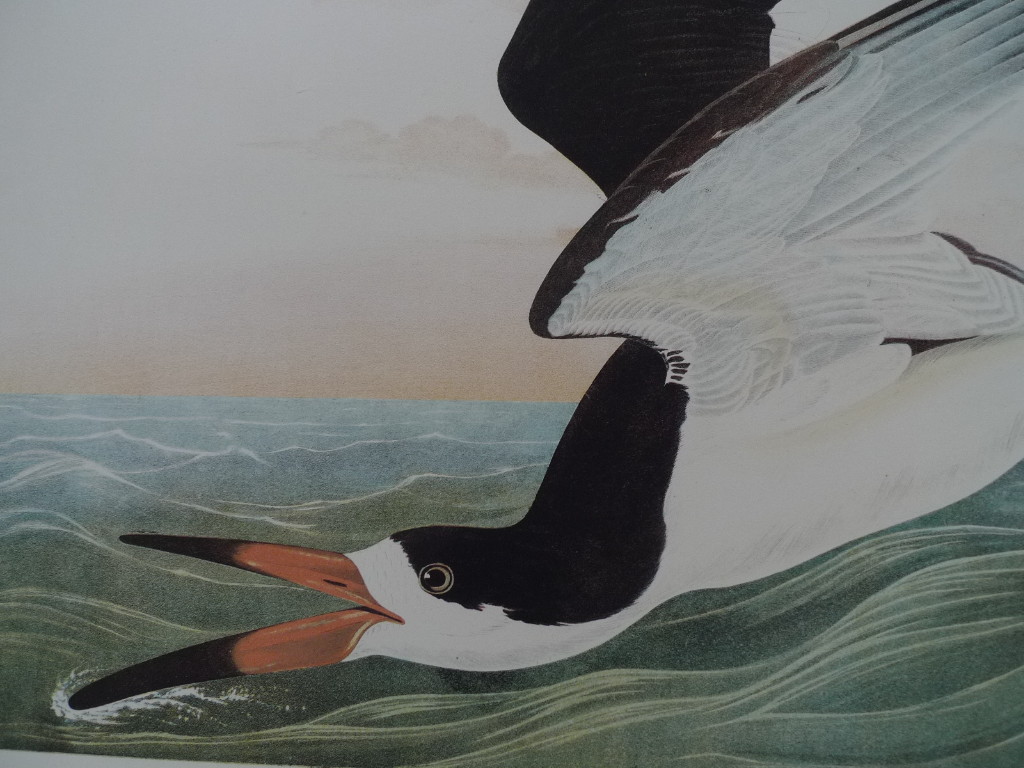
The bird is captured in the process of skimming the water for food. From Wikipedia: “Skimmers have a light graceful flight, with steady beats of their long wings. They feed usually in large flocks, flying low over the water surface with the lower mandible skimming the water (in order of importance) for small fish, insects, crustaceans and molluscs… caught by touch by day or especially at night.”
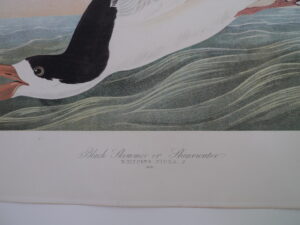
As is typical of all Audubon editions, the title area of the print shows the common and scientific name of the bird. Audubon has depicted a male in breeding plumage. Breeding females are identical in appearance.
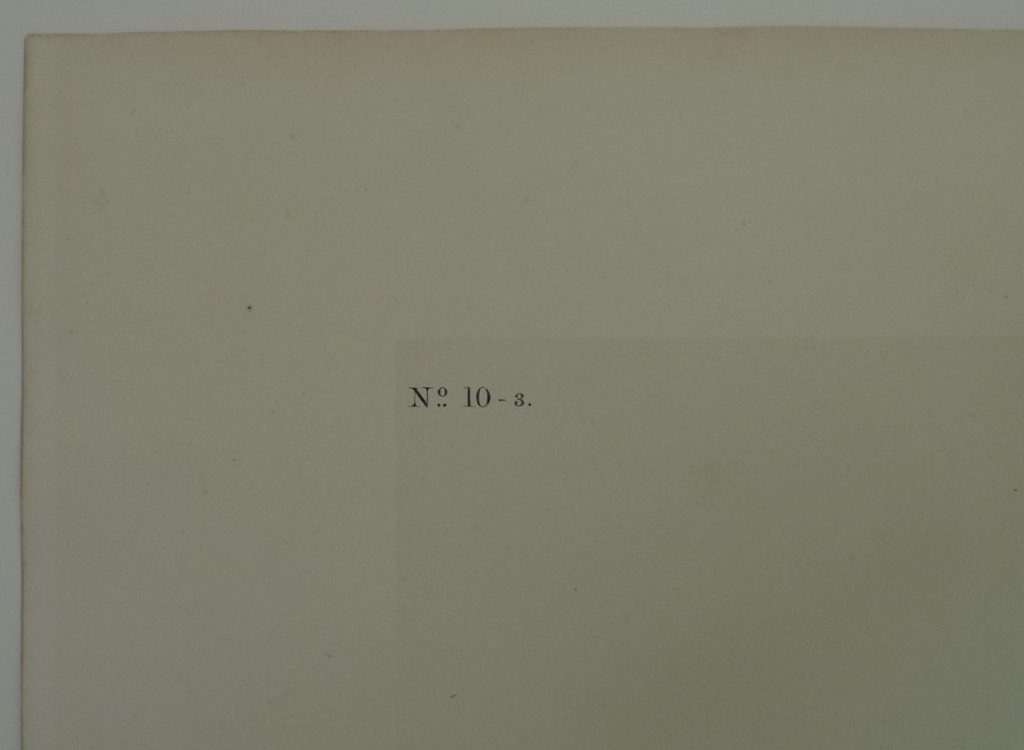
Showing top left corner, with part number indicated. Bien part numbers reflect the location of the print in the part, that is, this was the third print of the 10th part.
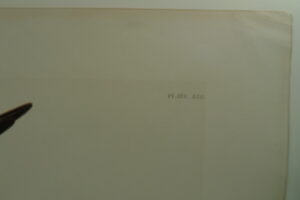
There is some creasing in the upper right corner. This corner also shows the Bien plate number (428).
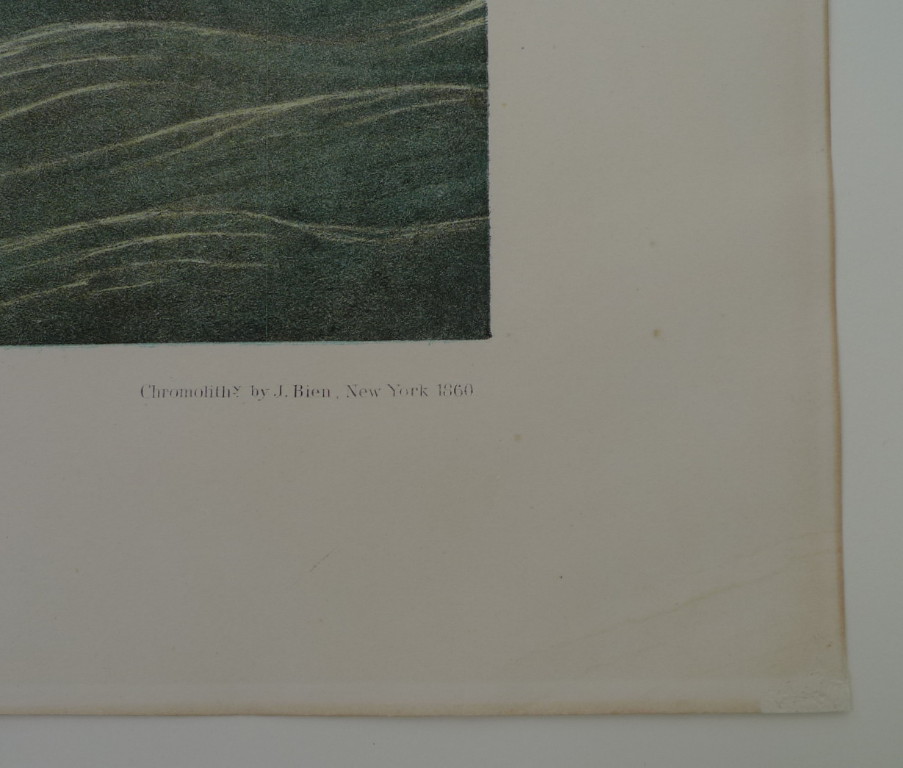
Repair in bottom right corner visible in area that is whiter — paper added to make up a very small chip of about 1/4 inch x 1/8 inch), line cutting the corner diagonally in photo is a crease.
Generally, this print is very attractive in the image area and will frame up very well with all repairs and creases easily covered by the mat. The abrasion affecting the the water is difficult to make out as such, and is of no great significance visually given the location.

Recent Comments